5
Builds in the portfolio
Five builds, from a 71-page contractor site holding page-one rankings to a from-scratch booking engine. Every number on this page comes from Search Console, GA4, or payment logs — and where a build is too new for data, it says so. That's the standard we hold ourselves to, because it's the standard you should hold anyone to.
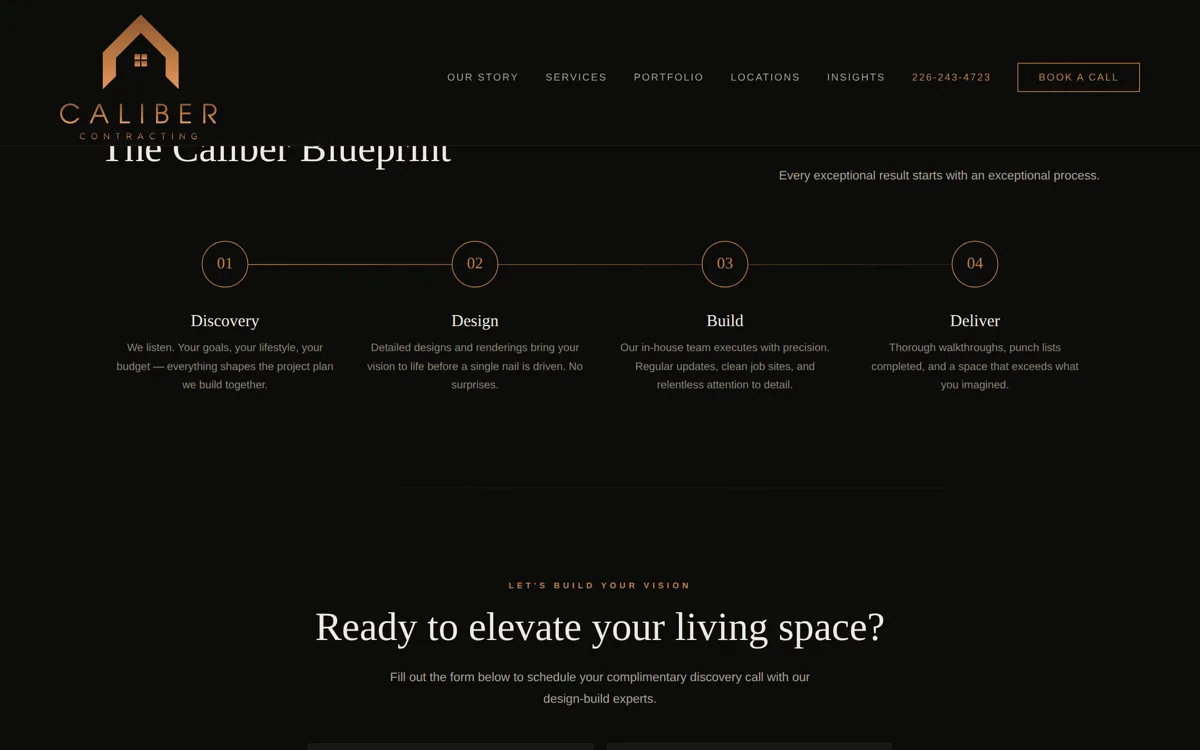
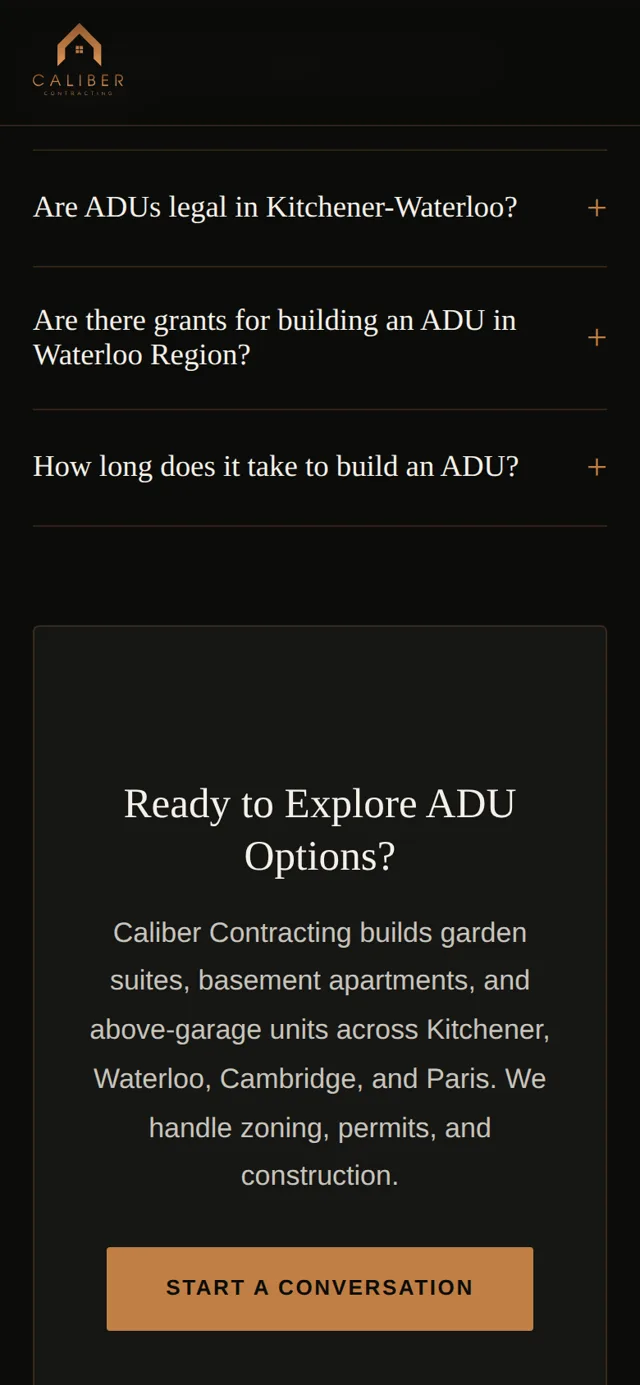
A design-build firm with strong word-of-mouth and weak digital capture needed to rank for high-intent renovation searches and convert research-stage homeowners. The answer: a 71-page hand-coded architecture with a city-specific cost-guide engine — now holding page-one positions on its highest-value queries and producing a steady qualified-lead pipeline.
Renovation buyers all search the same first question: "what does this actually cost here?" Most contractors dodge it. This build answers it head-on — a system of interlinked cost guides (kitchens, bathrooms, additions, garden suites, basements) where the first sentence delivers a real dollar range for the region, followed by four pricing tiers, city-specific sections written to the actual local housing stock, and FAQ accordions mirrored in structured data.
The hard part isn't writing one guide — it's keeping prices, tiers, timelines, visible text, and schema markup perfectly synchronized across the whole cluster while making each city section genuinely local instead of templated. The payoff: the flagship garden-suite guide holds a top-5 Google position with the site's highest engagement time.

Homeowners sign five- and six-figure renovation quotes they can't evaluate. QuoteGuard turns that into a self-serve product: upload a contractor's quote — even full engineer-stamped plan sets — and get a risk-scored, expert-grade analysis, with a genuine free preview and a paywall that actually holds.
The visitor picks a tier, drags in PDFs, and gets a scored report: risk score out of 100, severity-tagged findings (critical / warning / positive), each with a plain-language explanation, an estimated dollar impact, and the exact question to ask the contractor. Free users see a real preview; the rest sits behind a Stripe unlock.
Two hard problems got solved properly. Large-file ingestion: serverless limits silently kill big plan-set uploads, so the build uses presigned URLs — the browser sends files straight to cloud storage, and analysis runs as a background job with live status polling. A paywall that can't be walked around: locked findings are trimmed server-side and never reach the browser at all — nothing to extract from DevTools — with payment verified against Stripe's API and a replay guard so one payment can't unlock multiple reports. Every verified sale also auto-mints re-check codes and a personal referral code, emailed within seconds.
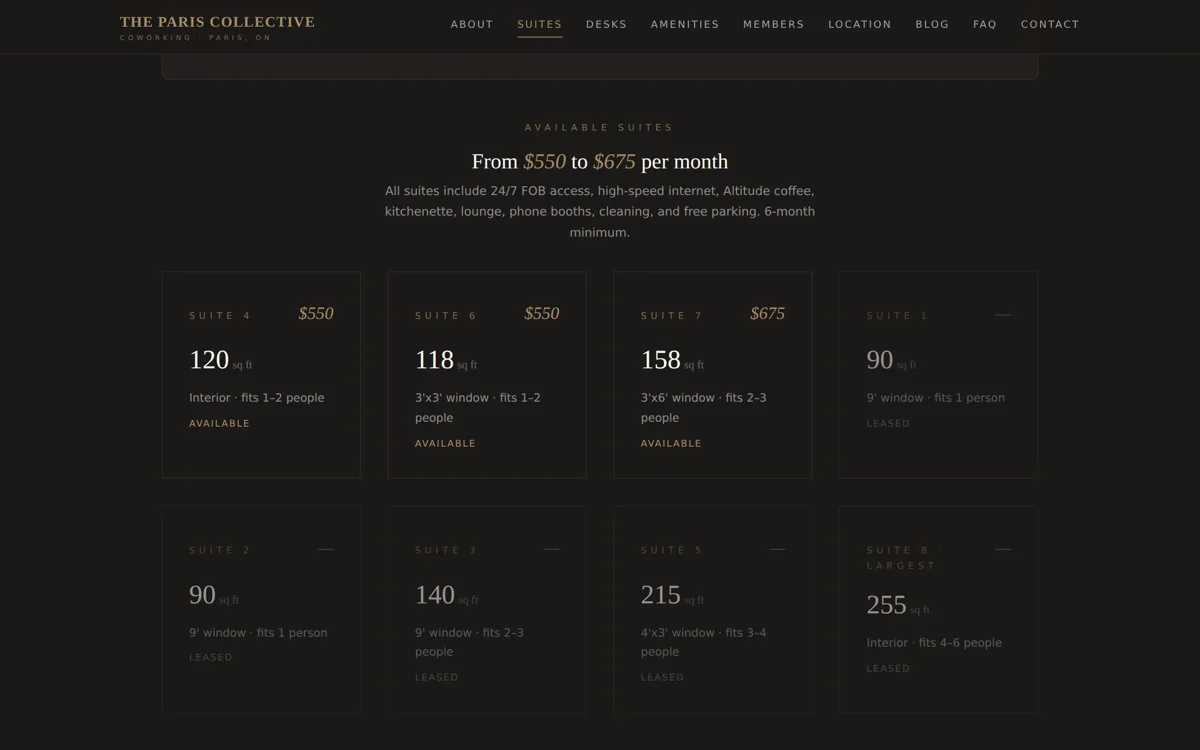
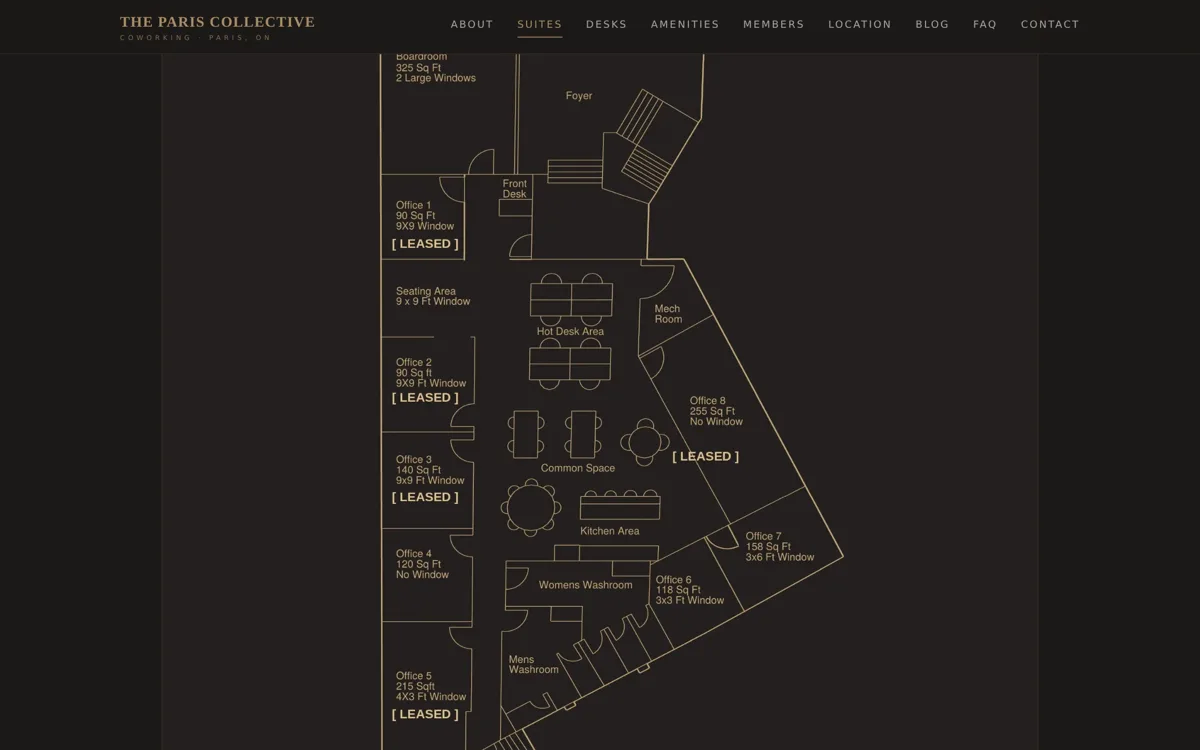
A pre-opening coworking space needed to rank for local office-space searches before its doors opened — with live suite availability that never contradicts itself across 35 pages. Within the first week of launch, its pages were indexed, ranking, and earning a 16.7% click-through on a member profile.
Two features carry this build. First, an interactive-availability suites page: suite cards reorder themselves — available first, leased below with muted "LEASED" badges — alongside a custom-recolored architect's floor plan with per-room leased stamps composited on and kept in sync. Inventory reads at a glance and never goes stale.
Second, a member directory where every resident business gets its own profile page — full structured data, breadcrumbs, and a dofollow link to the company's own site, all rendered from the shared template. It turns the space's community into an SEO asset for its members: one profile ranked at position ~4.8 with a 16.7% CTR within the first week. Suite numbers were deliberately stripped from profiles so they can never contradict the availability page — an anti-staleness decision baked into the architecture.

The hardest launch there is: a new company in a category buyers don't yet know to search for. The strategy — build search authority around the questions its owners actually ask (vacant-home insurance, short-term-rental economics), with software-grade content discipline on a ~47-page site.
Most sites rely on a human remembering the rules. This one doesn't: a custom consistency-check script runs on every build and fails deployment on any violation — banned vocabulary (a compliance requirement in this regulated space), stale pricing, duplicate H1s, overlong titles, malformed meta, missing canonicals. Editorial, SEO, and regulatory rules encoded as executable tests. It's the reason a 47-page site stayed internally contradiction-free through rapid edit cycles.
Around it: all pricing rendered from a single constants file (change a number once, it cascades everywhere), a topic-cluster content strategy where every factual claim is attributed to a primary source, and a proof-led design built around a real redacted water bill instead of stock photography — the visual equivalent of "we measure things."
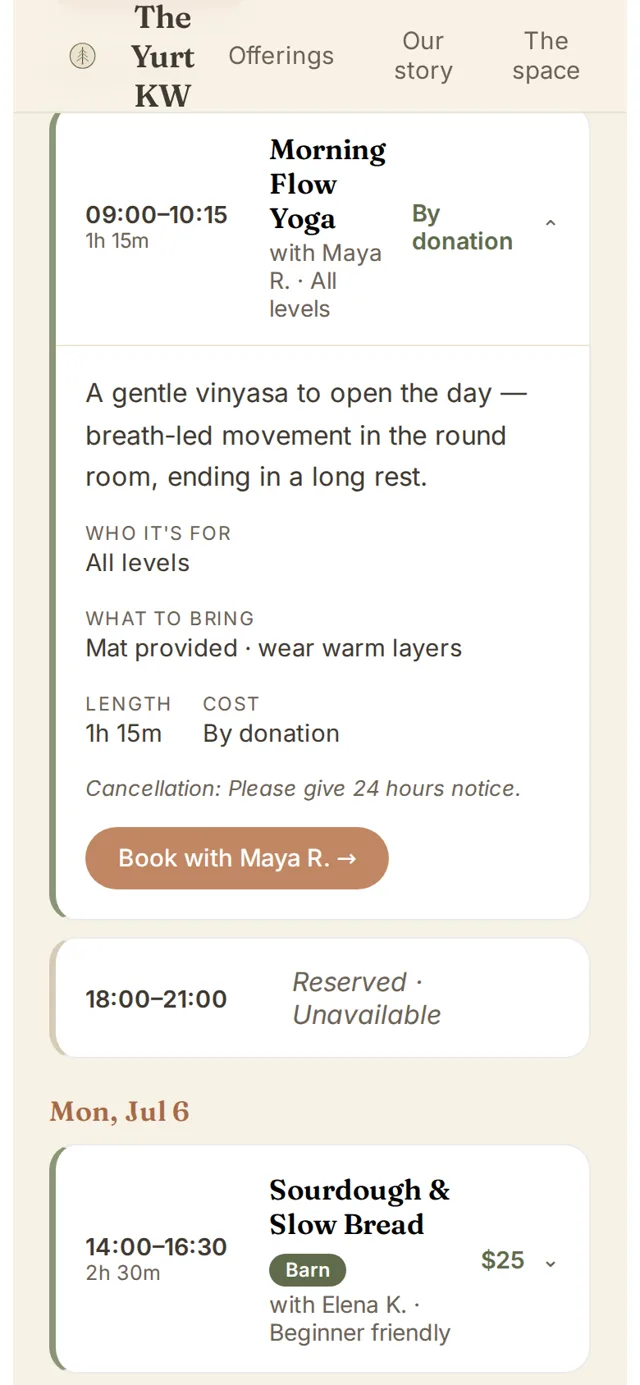
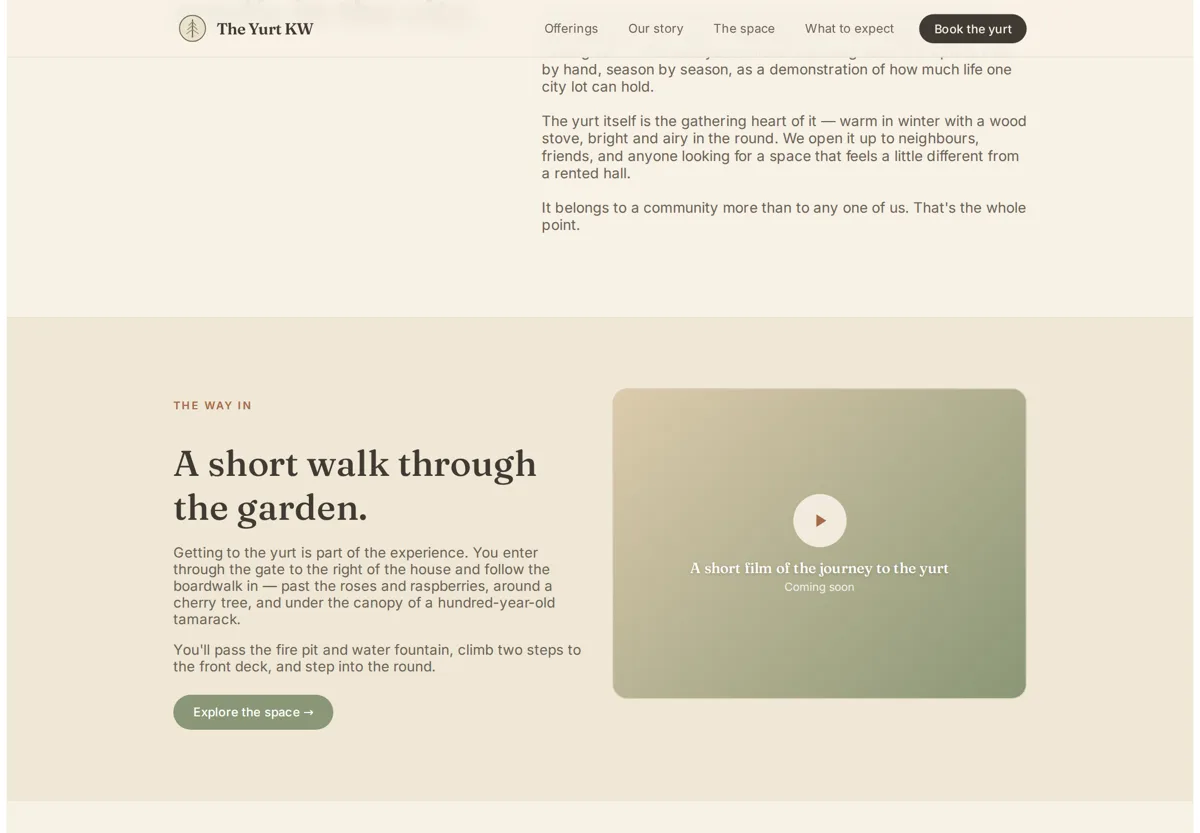
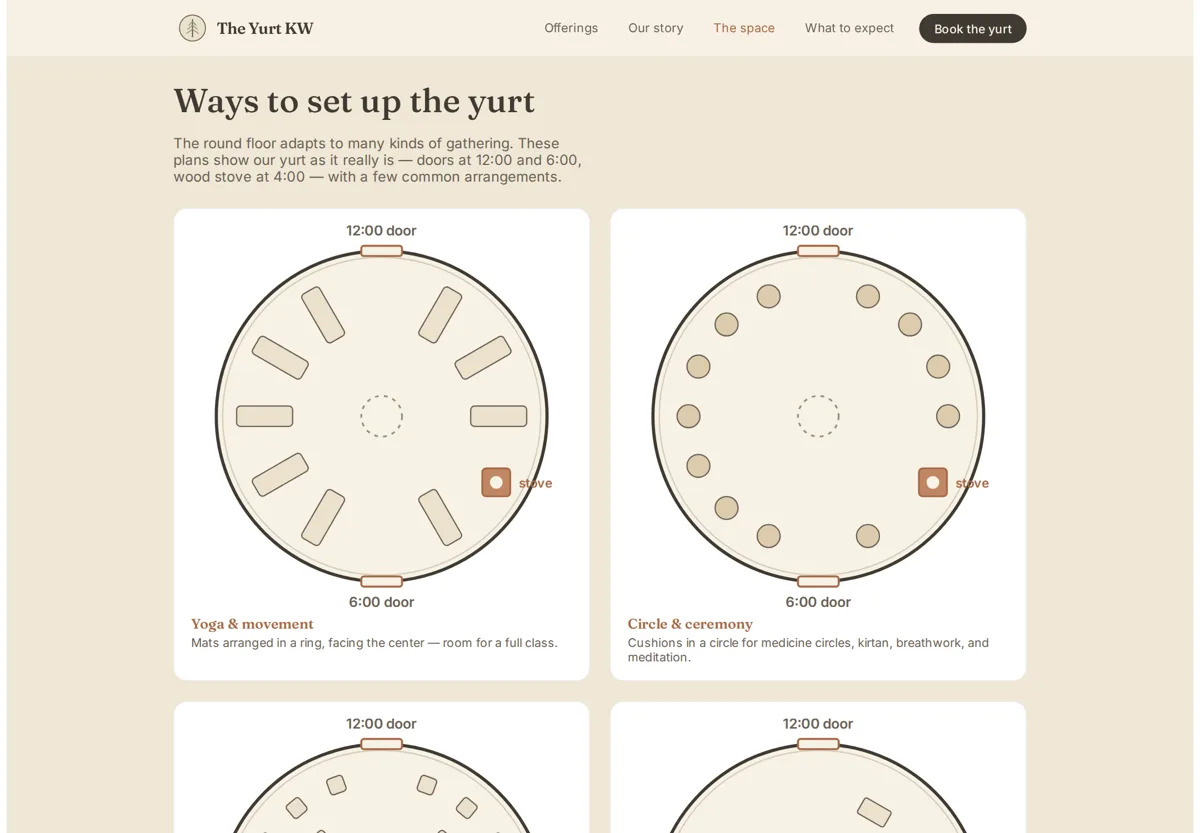
A donation-based gathering space — a 24-foot yurt and a century-old barn kitchen — booked entirely by DMs and email. The build replaces that with a from-scratch, approval-based booking system that no off-the-shelf scheduler could replicate.
The requirements broke every mainstream booking tool: a public program schedule and private bookings living on one calendar — approved public events show full detail (host, level, what to bring, price, a link to the practitioner's own registration); approved private events show only "Reserved · Unavailable," revealing nothing. A passcode-gated host dashboard is the single place requests get approved and contact details are visible.
The conflict logic is where it gets genuinely clever: the two spaces are treated as independent resources (a yurt booking doesn't block the barn), only approved bookings count as hard conflicts so multiple people can request a popular slot, and if your time is taken, the form suggests the nearest open windows that day as one-tap picks. Recurring series (weekly, biweekly, monthly) surface each conflicting date individually with per-date reschedule-or-skip — nothing fails silently.
Start where every one of these did: a straight, plain-English audit of where you stand and what it would take to get found.